
Rid Any Plant of Pests Organically: A Step-By-Step Guide
So, you’ve got a plant, and something seems a bit off. Maybe it’s not looking as vibrant as it once did, or perhaps you notice some unusual spots. Follow these steps to organically rid any plant of pests and fungus.
Ah, the Agave plant! The majestic, spiky wonder that makes our Mulholland Estate Farm look like a scene from a Wild West movie. But wait, what’s that? A blotch here, a spot there—could it be? Yes, it’s the dreaded fungus.
Agave plants, known for their resilience and minimal care requirements, are unfortunately not immune to fungal infections. These infections can turn your once proud, statuesque plants into a sad sight covered in unsightly spots and lesions. One minute you’re admiring your plant’s hardy beauty and the next, you’re Googling ‘Why is my Agave turning brown?’ with a sense of growing dread.
Introduction to the Problem
Initially, you might think it’s just a bit of dirt or maybe a bug having a snack. But as those spots spread, reality sets in—your plant has a fungal problem. And just like that, your garden becomes the setting for a botanical drama. But fear not! Understanding the common issues plants face, especially fungal infections, is the first step in reclaiming your garden or houseplant from the clutches of these microscopic invaders.
This guide’ll walk you through identifying the pest or fungus, organic treatments, and preventive measures to keep your plants healthy. So, grab your gardening gloves, and let’s get to work!
The Importance of Early Detection
Spotting plant problems early is crucial for maintaining a healthy garden. In our case, discoloration served as a red flag, prompting immediate action and investigation.
Identifying the Threat
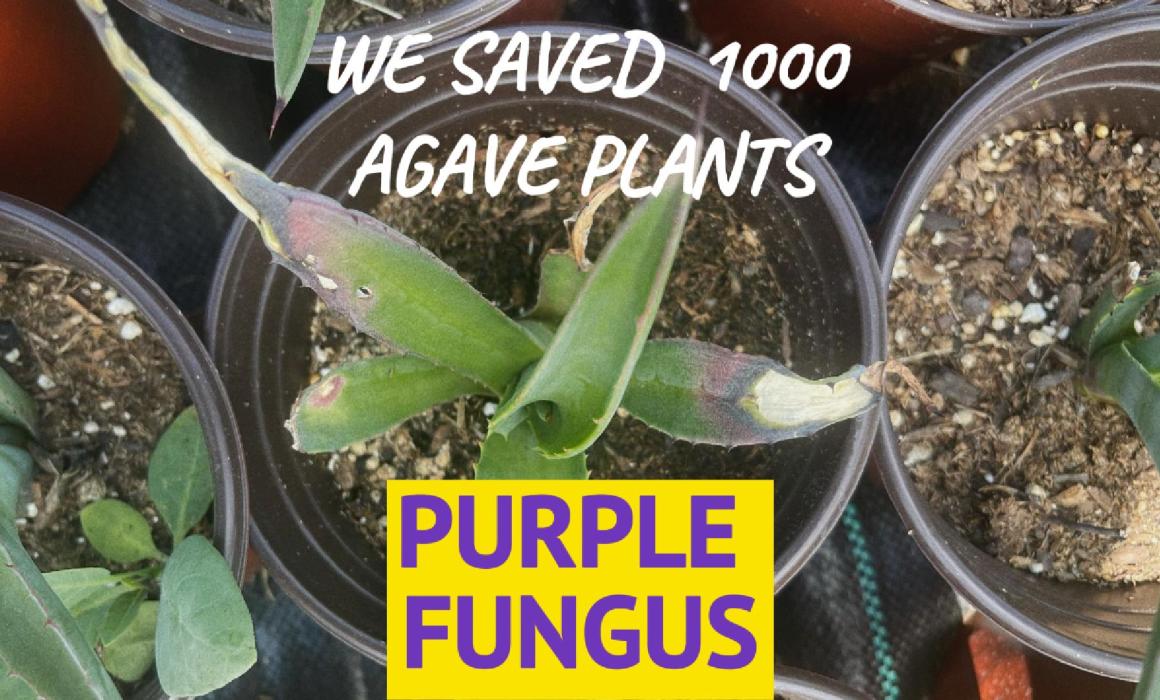
We panicked at first, but then we researched the problem with the discolored leaf tips. We found that a fungus was causing purplish-brown discoloration on the agave leaves. The fungus isn’t deadly to individual plants, but it spreads quickly through wind, water, and lizards running through them, making it a serious threat to our entire farm.
Symptoms of Fungus and Pests
First things first, let’s talk about symptoms. Here are some telltale signs that your plant might be under attack:
Purplish Brown Tips: One of the most common symptoms of fungus on agave plants is the appearance of purplish brown tips on the leaves. If you see this, it’s time to take a closer look.
Discolored Spots: Look for spots that are yellow, brown, or even black. These can be signs of fungal infections or pest damage.
Wilting or Drooping Leaves: If your plant’s leaves are wilting or drooping, it could be a sign of root rot, which is often caused by fungal infections.
Mold or Mildew: Check for any white, powdery substance on the leaves. This could be mold or mildew, which are common fungal issues.
Common Pests to Watch Out For
While we’re focusing on fungus, it’s worth mentioning that pests can also be a problem. Here are some common pests that we can also control organically:
Aphids: These tiny insects suck the sap from your plant and can cause significant damage. Look for clusters of small, green, or black insects.
Mealybugs: These pests look like little bits of cotton stuck to your plant. They’re usually found in the crevices of the leaves.
Spider Mites: These are tiny, spider-like pests that can cause leaves to become speckled and discolored. Look for fine webbing on the undersides of the leaves.
Scale Insects: These pests appear as small, brown bumps on the leaves and stems. They can be tough to spot but cause a lot of damage.
Identifying fungus and pests on your agave plant might seem daunting, but with a keen eye and a little know-how, you’ll be able to catch problems early and take action. Remember, the earlier you identify the issue, the easier it will be to treat it and save your plant from further damage.
Assessing the Spread
- Visual inspection of each plant
- Identifying affected specimens
- Separating infected plants to prevent further spread
We needed a strategic approach to tackle this issue and organically rid plants of pests and fungi. Our next steps involve developing an organic treatment plan to protect our agave crop. We aim to ensure its healthy growth for future Agave Spirit (tequila and mezcal) production.
Organic Treatment with Neem Oil
So, your beloved plant has fallen victim to a pest invasion? Fear not! Neem oil is here to save the day. We’ve tried several Neem Oils, this one mixes the best with water.
Buy on Amazon 70% Neem Oil
Buy on Amazon 1 GALLON ORANGE WATER BOTTLE
What is Neem Oil?
Neem oil is a natural pesticide derived from the seeds of the Neem tree native to India. It’s prized for its potent properties. It combats various plant issues without harsh chemicals. The smell is a bit robust, like roasted nuts or garlic. Maybe even a little intense at first, but you grow to love it.
Benefits of Using Neem Oil
Why neem oil, you ask? Here are some perks:
- Organic and safe: It’s a natural, non-toxic solution that’s safe for pets and humans.
- Broad-spectrum: Neem oil is effective against over 200 types of pests and fungi. It’s like a Swiss Army knife for your garden.
- Prevents future infestations: Regular use can help keep those pesky fungi and pests at bay.
- Promotes overall plant health
Here’s a step-by-step guide to treating your plant with neem oil.
Gather Your Ingredients
Before you channel your inner mad scientist, make sure you have the following:
- 70% Neem oil (organic, cold-pressed is best)
- Water
- Spray bottle
- Mild liquid soap (like Dawn dishwashing liquid)
- Baking soda (optional, but highly recommended for fungus)
Prepare the Neem Oil Solution
Time to mix up your magical potion. Follow these steps:
- Measure the neem oil: Pour 1 tablespoon of neem oil into a small container. Think of it as the elixir of life.
- Add the soap: Add 1 teaspoon of mild liquid soap to the neem oil. This helps the oil mix with water. Without it, you’ll have an oil-and-water situation—literally.
- Mix with water: Add the neem oil and soap mixture to 1 gallon of water. Shake it like you’re making a margarita (but don’t drink it) and fill your spray bottle.
- Optional – Add baking soda: If you’re feeling extra, add 1 tablespoon of baking soda to the gallon mix. This helps to combat fungal spores. Give it another good shake.
Spot Treating Affected Plants
With the neem oil solution prepared, we spot-treated affected plants. This targeted approach allows us to address the fungal issue efficiently and minimizes stress on healthy plants.
- Choose the right time: Apply the solution in the early morning or late afternoon to avoid burning the leaves in the midday sun. Your plants prefer a spa day, not a sunburn.
- Spray generously: Coat the leaves, stems, and any affected areas with the neem oil solution. Don’t be shy—drench those pesky foes!
- Repeat as needed: For severe infestations, repeat the treatment once a week until the fungus is gone. For maintenance, a once-a-month application should do the trick.
Preparing for Soil Drenching
We LOVE this watering can!
Buy on Amazon 1.5 GALLON GREEN WATERING CAN.
Soil drenching is a crucial step in our organic pest and fungus control strategy. This method ensures that the neem oil solution reaches roots and soil. Since pests leave eggs in the soil, this addresses potential issues beneath the surface.
Gathering Supplies
Before beginning the soil drench process, we assemble all necessary equipment, including diluted neem oil solution and watering cans.
- Diluted neem oil solution (1 tablespoon per gallon water)
- Large watering cans for efficient application
- Gloves and eye protection for safety
Calculating Solution Needs
We estimate the amount of solution needed based on the number of plants requiring treatment. Our 8-oz bottle of concentrated neem oil goes a long way, providing ample solution for our entire Agave Nursery.
Quarantine and Monitoring
My favorite thing I’ve bought this year is this Garden Cart! It’s So cute and I use it every day!
Buy on Amazon GARDEN CART HEAVY DUTY WAGON
Adaptive Strategies
As part of our treatment protocol we isolate affected plants from main group. This precautionary step helps prevent spread of fungus to healthy specimens
We continue to monitor treated plants closely. We watch for signs of improvement or any need for additional treatment. This vigilant approach ensures we stay ahead of potential issues. It helps maintain the health of our agave crop.
Treating the Entire Farm
Given the close proximity of our agave plants and windy conditions on the mountain, we opt to treat all plants as a preventive measure. This comprehensive approach helps mitigate the risk of further spread.
By following these steps, we’re taking proactive measures to protect our agave crop. This organic treatment method addresses current fungal issues. It also helps prevent future infestations ensuring health and vitality of our plants for sustainable tequila and mezcal production
Preventing the Spread of Disease
So, you’ve spotted some pesky fungus on your beloved plants, and now you’re wondering how to stop it from spreading like wildfire. Fear not, plant warrior! Here are some practical steps to prevent the spread of disease among your plants.
Isolate Infected Plants
First things first, quarantine those infected plants. Think of it as a plant version of social distancing. Keeping the infected agave away from the healthy ones helps to minimize the risk of the fungus spreading. Place the infected plants in an area with good airflow but away from direct wind that might carry spores to other plants.
Regular Monitoring
Please check your plants regularly for any signs. Early detection is key to preventing a small problem from becoming a big disaster. Look for any unusual spots, discoloration, or moldy patches on the leaves.
Manage Environmental Factors
Fungus loves moisture, so avoid overwatering your plants. These agave plants are pretty drought-tolerant, so it’s better to underwater than overwater. Also, ensure that your plants are in well-draining soil. Poor drainage can create a soggy environment that fungi adore.
Control Wind and Airflow
While good airflow is essential, you don’t want strong winds blowing fungal spores all over your garden. Position your plants in a way that they get enough air circulation but aren’t exposed to direct, strong winds. Using windbreaks like a fence or a row of taller plants can help.
Clean Your Tools
Your gardening tools can be sneaky carriers of fungal spores. After working with infected plants, make sure to disinfect your tools before using them on healthy ones. A simple solution of bleach and water will do the trick.
Avoid Overcrowding
Give your plants some personal space. Overcrowding can create a humid environment that is perfect for microbes to thrive. Ensure there’s enough space between plants for air to circulate freely.
So Did the Neem Oil Work?
Our weekly inspections revealed encouraging results. After two months of weekly neem oil applications we’ve observed significant improvement in our plants’ condition.
The majority of agave plants now appear healthy and fungus-free. This progress reinforces the effectiveness of our organic approach to rid plants of pests and fungi organically. The agave plants are finally getting their act together – no more fungus! Our organic approach is proving its worth in keeping those pesky pests and fungus at bay. Time to give those plants a round of applause – they’ve earned it!
Exploring Additional Organic Solutions
While neem oil has proven effective it’s wise to have diverse toolkit of organic solutions. Let’s explore additional methods to rid plants of pests.
Companion Planting
Strategic plant pairings can deter pests and promote plant health. Consider companions for your agave:
- Marigolds to repel nematodes
- Lavender attracts beneficial insects
- Garlic as a natural fungicide
Beneficial Insects
Encourage balanced ecosystem by introducing helpful insects. These natural predators can keep pest populations in check
- Ladybugs for aphid control
- Praying mantises for general pest management
- Parasitic wasps to combat caterpillars
Homemade Organic Sprays
Create your own organic pest and fungus deterrents using common household ingredients. These solutions can complement Neem Oil regimen:
- Garlic and chili pepper spray for insect control
- Baking soda solution for fungal issues
- Diluted milk spray to prevent powdery mildew
By incorporating these maintenance tips and dabbling in a few organic solutions, you’ll have a green thumb to envy. Just remember—staying on top of things and keeping an eye out for any unwanted garden visitors is the name of the game, and it will go a long way in keeping your garden pest-free and thriving!
Cheers!
Priti
As an Amazon Affiliate, We’ll show you some of our favorites. We earn a commission if you click on links and make a purchase at no additional cost to you.